Becoming a Church Member
Christian community begins with a gift. Long before we sign anything, stand before a congregation, or affirm promises, God has already made the first move. In baptism, God names us, claims us, and gathers us into the Body of Christ. Becoming a member of a congregation is never about earning a place or proving one’s worth. It is always a response to grace—a step taken within the wide-open arms of God, who welcomes and embraces each person long before they ever consider joining a church.
Because of this, everyone—member or not—is welcome to worship, to pray, to sing, to receive the sacraments, to join in fellowship, and to participate in the ministries of the community. The church is not a club with levels of access. It is the living Body of Christ, where all are invited to taste and see the goodness of God. No one is turned away. No one is less valued. The table of the Lord is for the hungry, not for the already-sorted.
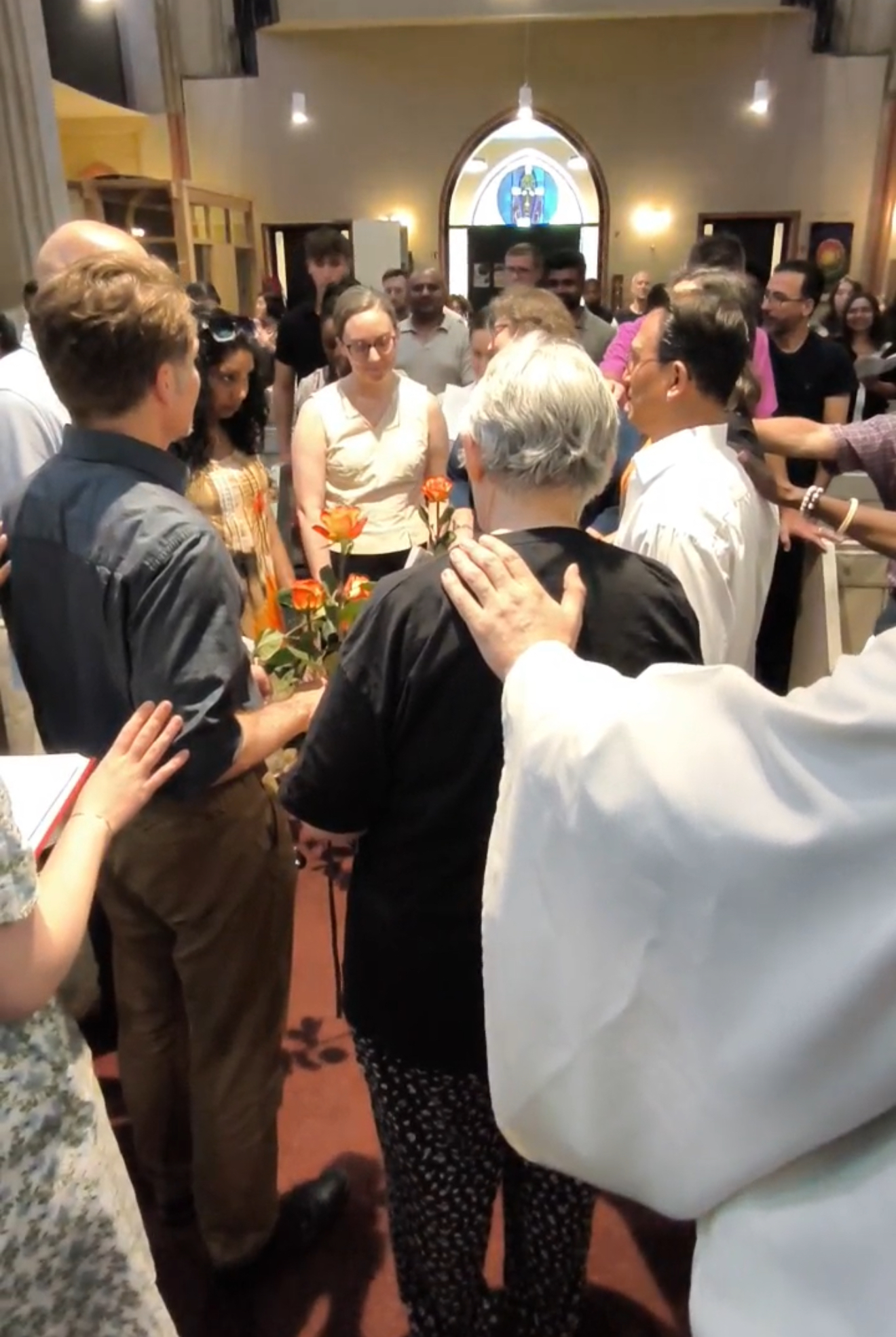
And yet, membership has a particular, beautiful meaning. It is a recognition that faith thrives not only as personal conviction but as shared life. Membership is not about boundaries; it is about covenant—entering a committed relationship with a specific community of Christians who seek to follow Jesus together in this time and place.
Membership as Covenant
In Scripture, a covenant is a binding promise that creates a relationship. God’s covenant is always the starting point—God promises steadfast love, faithfulness, and mercy that does not let go. When a person chooses to become a member of a congregation, they are responding to God’s covenant by making promises of their own: to gather for worship, to pray for the community, to grow in faith through the Word and the sacraments, to give and to serve serve according to their gifts, and to join in God’s mission in the world.
These promises are not made lightly. They are made with the understanding that the church, too, promises something in return: to proclaim the gospel, to offer the sacraments faithfully, to teach the faith, to accompany its members in joy and sorrow, and to walk with them through all the seasons of life. In a very real sense, membership is mutual care made visible.
This covenantal relationship is deeply Protestant. It is grounded in the conviction that God calls ordinary people to participate in Christ’s ministry, that faith is lived out in community, and that the Holy Spirit forms and strengthens us as we bear one another’s burdens and rejoice in one another’s hope. Membership is not a requirement for grace—it is a response to grace. It is a deliberate way of saying, “I am here. I belong to this people. We will follow Christ together.”
The Difference Membership Makes
Non-members can fully participate in almost every part of the church’s life: worship, communion, learning, service, fellowship, prayer, and even many ministries. This is intentional. The gospel is not withheld from anyone. In many congregations, people participate fully for months or years before feeling called to join. There is no pressure and no second-class status for those who are still exploring.
What makes membership distinct is not access but accountability, relationship, and shared responsibility.
Membership recognizes a mutual commitment between the individual and the congregation.
It grants a voice in the community’s discernment, particularly in congregational meetings and other forms of shared decision-making.
It marks a public identity, a clear belonging to the mission and ministry of this particular church.
It invites the community to care for you intentionally, just as you commit to caring for the community.
In this way, membership deepens the joys and responsibilities of Christian life. It is the difference between attending a meal and taking your place at the family table—not because others are excluded, but because you have chosen to be part of the ongoing life, work, and discernment of this household of faith.

For Those Who Are Still Listening, Searching, or Unsure
Some people are drawn to a church but do not yet feel ready to make such promises. Others may never choose formal membership and still participate deeply in worship, learning, fellowship, and service. These individuals are not outsiders. They are part of the community’s life in every meaningful sense. They are companions on the journey, fellow seekers held by the grace of God.
A healthy congregation honors this. It welcomes all without distinction, trusting that the Spirit works in each person’s life in God’s own time. Membership is never a prerequisite for belonging—it is a particular way of living out the belonging we already have in Christ.

A Covenant Shaped by Grace
Ultimately, becoming a member is about letting yourself be woven into a particular community of disciples. It is about saying yes to God’s call to live a shared faith, not only in private devotion but in public commitment. It is a covenant shaped by grace, rooted in baptism, strengthened at the Lord’s table, and lived out in daily life.
Those who become members are not more beloved than those who do not. They are simply choosing to stake their lives more visibly on the gospel, in fellowship with people they trust and love.
The church remains a welcoming space for all. And membership stands as a beautiful sign that God forms not solitary believers but a people—called, gathered, and sent for the sake of the world.